21/01/2026
An Interview with Marin Dacos, National Open Science Coordinator at the Ministry of Higher Education, Research and Space in France and Chair of the Global Research Initiative on Open Science.
By Maria Karatzia
There is a moment in every transformative work when someone pauses what they are doing to ask: “Wait—do we actually know if this works?“
For Marin Dacos, that moment came during the COVID-19 pandemic, as medical research data became crucial to policy decisions—yet researchers weren’t systematically sharing results of unsuccessful trials nor the data underlying research publications. This gap, he realised, was critical when it mattered most. “We say that open science saves lives, and one place where it’s quite obvious is medical research in general, and clinical trials in particular,” he reflects. During the pandemic, if unsuccessful vaccine or treatment trials remained hidden, it would slow the discovery of what actually worked. Transparent sharing of all results—successful and unsuccessful—is how we find the right answers faster, and that can mean the difference between life and death. “When I’m old, I want my grandchildren to ask me what did you do, Pépé (grandfather)? And I would say, I have saved some lives.”
That realisation sparked the creation of GRIOS, the Global Research Initiative on Open Science, dedicated to answering one fundamental question: what does the research actually show about open science policies?
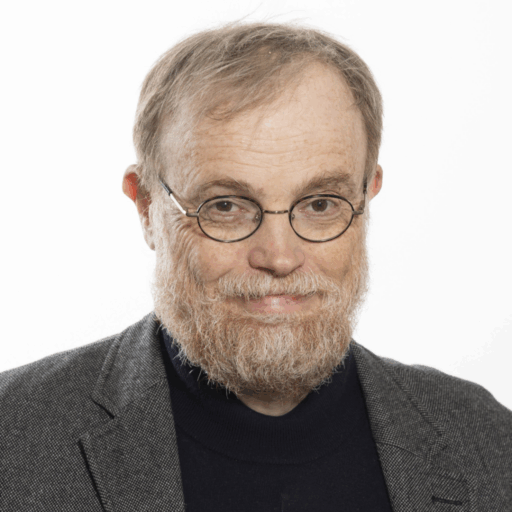
Marin’s 26-year journey in open science began with a simple observation: printed journals lay unused in university hallways, and the knowledge they contained remained inaccessible to most researchers. As he recalls, “I was a board member of two historical journals, and I noticed their printed versions stacked in halls of the university, just sitting there. Nobody was reading them. They weren’t in the correct place—they should be online.”
It was the late 1990s, and that observation would become his life’s work. By the time he had built websites for these two journals, the pattern was clear: this wasn’t a pair of isolated projects but a template for hundreds of journals that needed similar online visibility. What began as an observation, evolved into OpenEdition, a platform that shaped knowledge sharing in the humanities and social sciences field, serving today more than 600 journals, 15,000 books, and over a hundred million visits per year.
In the following years, Marin co-created more resources: Calenda (2001), a tool for announcing events in social sciences and humanities, Hypotheses.org (2008), a platform for academic blogging which hosts over 5,000 blogs, and “Open Access Freemium”, a business model for the development of open access academic publishing based on crowdsourced institutional support rather than subscription revenue.
All these initiatives proved that open access was feasible—a conviction that shaped his thinking when, a few years later (2017), he joined the French Ministry of Research as Open Science Advisor, moving from platform-building to policy-making. Looking back, he reflects on that moment: “I accepted the position, thinking I could contribute at the national level, not just for the humanities and social sciences, but for all disciplines. And not only for publications, but also for data and other open science topics. I believed that within three years the work would be accomplished. Now, after eight years of commitment within the ministry, we’ve achieved a great deal, and the work continues.”
When I’m old, I want my grandchildren to ask me what did you do, Pépé (grandfather)? And I would say, “I have saved some lives”.
After years working on French open science policy, Marin noticed a different paradox. Open science policies were spreading across Europe, but without clear evidence of what actually worked. “In the ministry we say that every public decision should be driven by science. To make good decisions on health, climate, transport, you always have to rely on science”, he explains. But when we make decisions on open science policy itself, do we apply the same principle? “In an ideal world, we would, but that’s not always the case”, he concedes.
This challenge became clear in practice: “I start every day by reading papers from the academic community about open science, and I learn a lot; I get plenty of ideas. But this is a craft approach, not a systematic one. I do this by myself, in my office, on the train. Yet the volume of knowledge about open science is rising so quickly that no single person can read everything, understand everything, synthesise everything and make decisions based on it.”
Inspired by models like the Intergovernmental Panel on Climate Change (IPCC), which synthesises thousands of studies to inform global policy, Marin began to envision a different kind of initiative. Not another time-limited research project, but something enduring. An initiative that would systematically synthesise research about open science itself, then make that evidence available to those who needed it most: policymakers, funders, and institutions.
To make good decisions on health, climate, transport, you always have to rely on science. But when we make decisions on open science policy itself, do we apply the same principle? In an ideal world, we would, but that’s not always the case.
Amid various open science initiatives, GRIOS occupies a distinctive niche: it’s the only initiative dedicated specifically to commissioning and synthesising systematic reviews of existing research about open science, then using those findings to inform open science policies. Marin is explicit about it: “There is no other initiative like GRIOS. There are initiatives concerning openness, assessment, research data, and clinical trials. But none dedicated to systematic reviews of research on open science used to inspire open science policy.”
Rather than duplicate existing work, GRIOS’s approach is fundamentally collaborative. For example, valuable work is already underway on research on research by the Research on Research Institute (RoRI); PathOS, a research project funded by the European Commission, has also conducted very interesting systematic reviews on open science impact, which is one of the topics GRIOS is interested in. Instead of starting from scratch, GRIOS will build on this foundation. “We are very happy to see that talented researchers at European level made this huge work,” Marin reflects. “Now we can collect the fruit of it, thank the authors and advance it further.”
However, the scope is broader. Beyond Open Access, Open Science now encompasses research data, citizen science, software, clinical trials, and reproducibility—each with its own constraints and research community. “The deeper you go into software or clinical trials, the more you are addressing new issues, new complexity, new disciplines, habits or constraints,” Marin notes. “Even within a single discipline, reproducibility is a complex issue. Across multiple disciplines, it becomes even more complex.”
No single policymaker can navigate this alone. This is why GRIOS needs to work across multiple levels: “If we want Open Science to be more comprehensive, we need to help the policy makers at university level, research performing organisation level, but also at national and international levels too.” Each level faces different pressures and needs different evidence.
Marin strongly believes that knowledge shared broadly is transformative. “Knowledge is power for policy people; it’s also useful for researchers, companies, citizens, teachers”, he says. In 2016, when he received the CNRS Innovation Medal—rare recognition for a humanities scholar—his acceptance speech was titled “Le savoir est une arme” (=”Knowledge is power”), capturing the idea that closed knowledge loses value, while shared, open knowledge gains it. “We don’t pursue open science because it’s nice, friendly or socially conscious. We do it because research needs to be spread and replicated to create conversation between researchers and society”, he explains.
This philosophy extends to GRIOS itself. In a landscape where knowledge about open science is expanding fast, systematic synthesis—finding what works, identifying gaps, making findings accessible to decision-makers and practitioners —transforms scattered knowledge into actionable insight.
Marin is realistic about the timeline required: “The change of the academic ecosystem needs to be so radical, so profound that you cannot decide and change it in the snap of a finger; it will probably require a new cycle of open science policies”. But he adds: “My hope is not to wait 50 years to speed up the process a bit”. By systematically synthesising research that individual policymakers cannot absorb alone, GRIOS aims to accelerate that change.
Knowledge is power for policy people; it’s also useful for researchers, companies, citizens, teachers. […] We pursue open science because research needs to be spread and replicated to create conversation between researchers and society.
Since GRIOS launched, inquiries have come from across the globe asking how to participate. There are many ways to contribute. “To make GRIOS fly really high,” Marin explains, “the first path is joining as a funder”. This level of involvement means direct influence on GRIOS’s agenda, helping shape priorities and overseeing the commissioning of systematic reviews.
Researchers and academics can engage through the Academic Advisory Board, which ensures evidence-gathering remains rigorous and relevant, or by following GRIOS publications and resources, thus staying informed and identifying where expertise might be helpful. Others may wish to respond to calls for scoping reviews, which will follow later this year.
What matters is participation at every level, because building an evidence base for Open Science policies requires collaboration across borders and sectors.
Ready to be part of the conversation? Join us: https://www.grios.org/contact